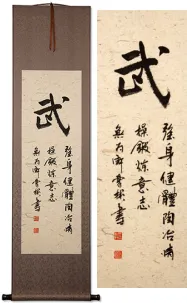
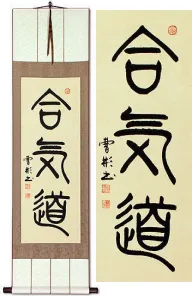
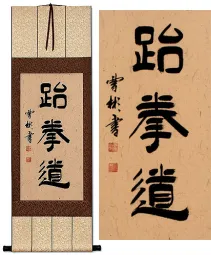
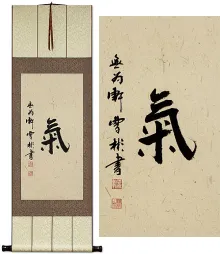
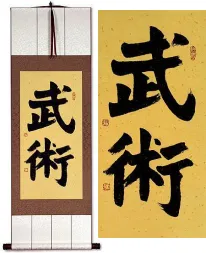
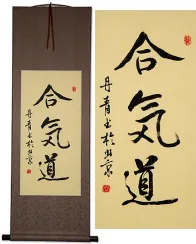
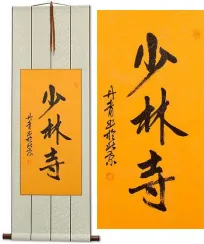
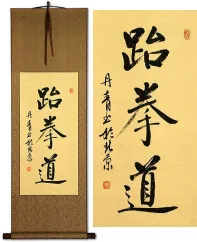
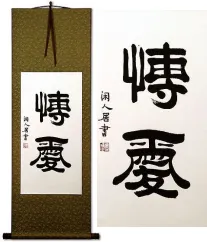
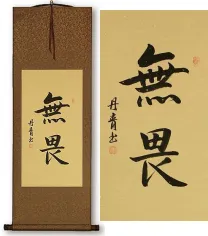
We have 162 Japanese scroll, ready to ship to you right now.
Japanese Scroll for Sale
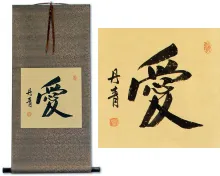
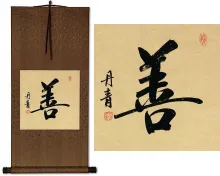
Sold Out $39.88
More Coming Soon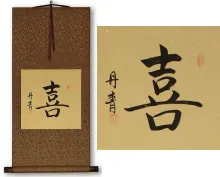
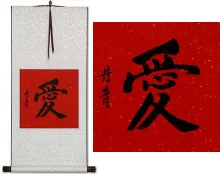


Sold Out $122.88
More Coming SoonDue to a military deployment, shipping will happen once a week until November 20th. News and More Info
We have 162 Japanese scroll, ready to ship to you right now.
Sold Out $39.88
More Coming SoonSold Out $122.88
More Coming Soon92 Japanese calligraphy titles are available as custom-made wall scrolls. Choose your calligrapher, size, and other options.
Custom orders are typically delivered in several weeks.
You can customize and order a one-of-a-kind Japanese Scroll. Pick from the titles below to get started...
Beyond benevolence, 仁 can also be defined as “charity” or “mercy” depending on context.
The deeper meaning suggests that one should pay alms to the poor, care for those in trouble, and take care of his fellow man (or woman).
仁 is one of the five tenets of Confucius. In fact, it is a subject that Confucius spent a great deal of time explaining to his disciples.
I have also seen this benevolent-related word translated as perfect virtue, selflessness, love for humanity, humaneness, goodness, goodwill, or simply “love” in the non-romantic form.
This is also a virtue of the Samurai Warrior
See our page with just Code of the Samurai / Bushido here
Single Character for Courage
勇 can mean bravery, courage, valor, or fearless in Chinese, Japanese, and Korean.
勇 is the simplest form to express courage or bravery, as there is also a two-character form that starts with this same character.
勇 can also be translated as brave, daring, fearless, plucky, or heroic.
This is also a virtue of the Samurai Warrior
See our page with just Code of the Samurai / Bushido here
See Also: Bravery / Courage | Encourage
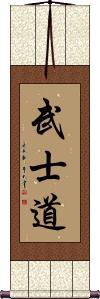
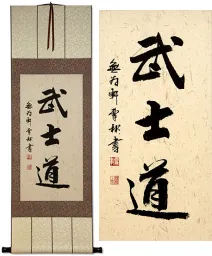
武士道 is the title for “The Code of the Samurai.”
Sometimes called “The Seven Virtues of the Samurai,” “The Bushido Code,” or “The Samurai Code of Chivalry.”
This would be read in Chinese characters, Japanese Kanji, and old Korean Hanja as “The Way of the Warrior,” “The Warrior's Way,” or “The Warrior's Code.”
It's a set of virtues that the Samurai of Japan and ancient warriors of China and Korea had to live and die by. However, while known throughout Asia, this title is mostly used in Japan and thought of as being of Japanese origin.
The seven commonly-accepted tenets or virtues of Bushido are Rectitude 義, Courage 勇, Benevolence 仁, Respect 礼(禮), Honour 名誉, Honesty 誠, and Loyalty 忠実. These tenets were part of oral history for generations, thus, you will see variations in the list of Bushido tenets depending on who you talk to.
See our page with just Code of the Samurai / Bushido here
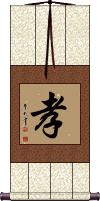
孝 represents filial piety.
Some will define this in more common English as “respect for your parents and ancestors.”
孝 is a subject deeply emphasized by the ancient philosophy and teachings of Confucius.
Some have included this in the list for the Bushido, although generally not considered part of the 7 core virtues of the warrior.
Note: 孝 is not the best of meanings when seen as a single character. Some will read the single-character form to mean “missing my dead ancestors.” However, when written as part of Confucian tenets, or in the two-character word that means filial piety, the meaning is better or read differently (context is important for this character).
We suggest one of our other two-character filial piety entries instead of this one.
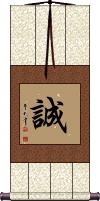
誠 means truth, faith, fidelity, sincerity, trust, and/or confidence.
As a single-character wall scroll, this suggests that you believe “honesty is the best policy,” as your personal philosophy.
This is also a virtue of the Samurai Warrior
See our page with just Code of the Samurai / Bushido here
See Also: Sincerity and Faithfulness | Sincere Heart
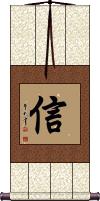
信 is another character that expresses the idea of honesty.
It can also mean truth, faith, belief in, fidelity, sincerity, trust, and/or confidence.
Some have included this in the list for the Bushido, although “makoto” is probably more common/popular.
Note: In some contexts, this character can mean a letter (mail), news, or envoy. However, alone, it will generally be read with the honesty-meaning.
See our page with just Code of the Samurai / Bushido here
See Also: Two
(Modern Japanese version)
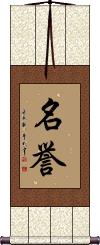
名譽 is a version of honor that is about having or earning the respect of others and about your reputation.
It is the status of being worthy of honor (not to be confused with doing honorable things or specific actions - see our other “honor” listing for that).
 Both modern Japanese and modern mainland Chinese use the same simplified version of the second character of honor. You can make a special request for the traditional second character as shown to the right (just click on that character to the right of you want to order that version). Before WWII, both Japan and China used the traditional form but modern Japanese and Chinese use this simplified form. Koreans still use the traditional form when they are not writing in their modern Hangul glyphs.
This is also a virtue of the Samurai Warrior
See our page with just Code of the Samurai / Bushido here
Also means: honor loyalty morality righteousness
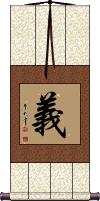
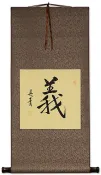
義 is about doing the right thing or making the right decision, not because it's easy but because it's ethically and morally correct.
No matter the outcome or result, one does not lose face if tempering proper justice.
義 can also be defined as righteousness, justice, morality, honor, or “right conduct.” In a more expanded definition, it can mean loyalty to friends, loyalty to the public good, or patriotism. This idea of loyalty and friendship comes from the fact that you will treat those you are loyal to with morality and justice.
義 is also one of the five tenets of Confucius's doctrine.
 There's also an alternate version of this character sometimes seen in Bushido or Korean Taekwondo tenets. It's just the addition of a radical on the left side of the character. If you want this version, click on the image to the right instead of the button above.
This is also a virtue of the Samurai Warrior
See our page with just Code of the Samurai / Bushido here
See Also: Judge | Unselfish: Perfectly Impartial | Ten
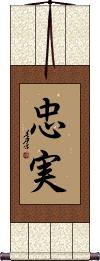
忠実 is a Japanese way to write “Loyalty” - it also contains the ideas of being faithful, devoted, true, and obedient.
The second character is a modified form only used in the Japanese lexicon; however, Chinese speakers can easily guess the meaning.
This is also a virtue of the Samurai Warrior
See our page with just Code of the Samurai / Bushido here
Politeness, Gratitude and Propriety
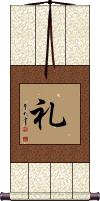
礼 is one of the five tenets of Confucius.
Beyond respect, 礼 can also be translated as propriety, good manners, politeness, rite, worship, or an expression of gratitude.
We show respect by speaking and acting with courtesy. We treat others with dignity and honor the rules of our family, school, and nation. Respect yourself, and others will respect you.
 Please note that Japanese use this simplified 礼 version of the original 禮 character for respect. 礼 also happens to be the same simplification used in mainland China. While 禮 is the traditional and original version, 礼 has been used as a shorthand version for many centuries. Click on the big 禮 character to the right if you want the Traditional Chinese and older Japanese versions.
This is also a virtue of the Samurai Warrior
See our page with just Code of the Samurai / Bushido here
See Also: Confucius
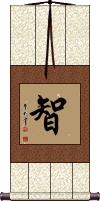
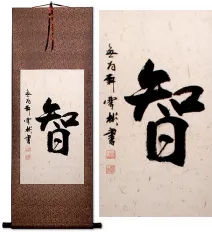
智 is the simplest way to write wisdom in Chinese, Korean Hanja, and Japanese Kanji.
Being a single character, the wisdom meaning is open to interpretation, and can also mean intellect, knowledge or reason, resourcefulness, or wit.
智 is also one of the five tenets of Confucius.
智 is sometimes included in the Bushido code but is usually not considered part of the seven key concepts of the code.
See our Wisdom in Chinese, Japanese, and Korean page for more wisdom-related calligraphy.
See Also: Learn From Wisdom | Confucius
Samyag Vyayama / Samma Vayama
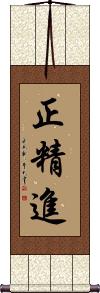
正精進 is one of the Noble Eightfold Paths of Buddhism. Right Effort, along with Right Mindfulness and Right Concentration, constitute the path to Concentration or Perfect Thought.
The proper effort is not the effort to make something particular happen. It is the effort to be aware and awake in each moment, the effort to overcome laziness and defilement, and the effort to make each activity of our daily meditation. This concept is about pursuing wholesome things that promote good karma.
Another definition: Cultivation of what is karmically wholesome and avoidance of what is karmically unwholesome.
This term is exclusively used by devout Buddhists. It is not a common term, and remains an unknown concept to most Japanese and Chinese people.
See Also: Buddhism | Enlightenment | Noble Eightfold Path
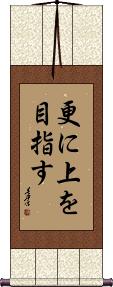
This Japanese proverb literally translates as: [After having achieved a fair degree of success,] one should still try to do better.
Others may translate this as “Always try to improve,” or “Always try to be better.”
Note: Because this selection contains some special Japanese Hiragana characters, it should be written by a Japanese calligrapher.
See Also: Never Give Up
Old Japanese / Traditional Chinese & Korean
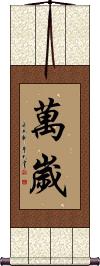
萬歲 is the traditional Chinese, Korean Hanja, and ancient Japanese way of writing banzai.
In modern times, the first character was simplified in Japan and China. So you might want to select the other entry for universal readability.
While it has become a popular, if not an odd, thing to scream as you jump out of an airplane (preferably with a parachute attached), banzai is actually a very old Asian way to say “hooray.” The Japanese word “banzai” comes from the Chinese word “wan sui,” which means “The age of 10,000 years.” It is actually a wish that the Emperor or the Empire live that long.
Imagine long ago when the Emperor made a rare public appearance. 萬歲 is what all people would yell to their leader in respect.
So if you like it as a hooray, or you want to wish someone that they live for 10,000 years, this is the calligraphy for you.
Other translations include Cheers! (not the drinking kind), hurrah!, long live [name]!, and congratulations!
To other things with banzai in their names, I am still waiting for the promised sequel to Buckaroo Banzai.
Notes: Sometimes people confuse banzai with bonsai. A bonsai is a miniature tree. They have nothing to do with each other.
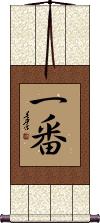
一番 is often used to mean “best” or “the best” in Japanese.
It actually means “number one” in Japanese.
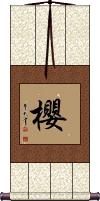
櫻 is the single-character (short) way to write “cherry blossom” or “cherry tree” in Chinese and traditional Japanese Kanji.
 There is an alternate version of this character, which has become the standard for Japanese Kanji. If you want this version, instead of the one shown to the upper left, please click on the Kanji shown to the right instead of the button above. Although this is an alternate form in Chinese, most Chinese people will think this is just the Japanese version (Chinese people
don’t
necessarily know the history and all alternate forms of Chinese characters from the past). Therefore, this version shown to the right is best if your audience is Japanese (though most Japanese will recognize the form shown in the upper left).
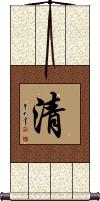
清 is a word that means clarity or clear in Chinese, Japanese Kanji, and old Korean Hanja.
Looking at the parts of this character, you have three splashes of water on the left, “life” on the top right, and the moon on the lower right.
Because of something Confucius said about 2500 years ago, you can imagine that This means “live life with clarity like bright moonlight piercing pure water.” The Confucian idea is something like “Keep clear what is pure in yourself, and let your pure nature show through.” similar to saying, “Don't pollute your mind or body, so that they remain clear.”
This might be stretching the definition of this single Chinese character but the elements are there, and “clarity” is a powerful idea.
Korean note: Korean pronunciation is given above but this character is written with a slight difference in the “moon radical” in Korean. However, anyone who can read Korean Hanja, will understand this character with no problem (this is considered an alternate form in Korean). If you want the more standard Korean Hanja form (which is an alternate form in Chinese), just let me know.
Japanese note: When reading in Japanese, this Kanji has additional meanings of pure, purify, or cleanse (sometimes to remove demons or “exorcise”). Used more in compound words in Japanese than as a stand-alone Kanji.
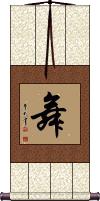
舞 is the simplest way to write dance in Chinese, Japanese Kanji, and old Korean Hanja.
It can also be translated as to dance, to wield, to brandish, or to circle.
舞 reads more clearly as dance in Chinese than it does in Japanese (see our two-character word for dancing if you want to be absolutely clear in both languages).
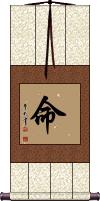
命 is often translated as “destiny.”
Sometimes this character is simply translated as “life” but more in terms of one's lot in life. In a certain context, this can mean command or decree (generally from a king or emperor). Of course, such a decree is part of fate and leads you to fulfill your destiny.
In Chinese, this word leans toward the fate or destiny definition.
In Korean, it is usually read simply as “life.”
In Japanese, it can mean all definitions shown above, depending on context.
See Also: House of Good Fortune
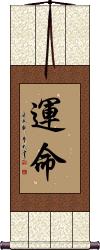
These two characters contain the ideas of fate, destiny, fortune, and luck in Chinese, Japanese Kanji, and old Korean Hanja.
運命 is often defined as “a person's fate” or “personal fate” in various dictionaries.
These two characters can be reversed (written in either order) and yield roughly the same meaning.
This particular character order is more common in old Korean and less common in modern Chinese.
See Also: House of Good Fortune | Good Luck
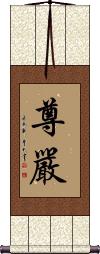
尊嚴 is a form of honor that means showing great respect for yourself, other people, and the rules you live by.
When you are honorable, you keep your word. You do the right thing regardless of what others are doing.
尊嚴 is the kind of personal honor or dignity that is of great value. If you lose this, you have lost yourself and perhaps the reputation of your family as well.
While this is not directly the same thing as “face” or “saving face” in Asian culture, it is associated with the same concept in China.
 In Japan, they currently use a more simplified second character for this word. The ancient Japanese form is the same as China but after WWII some Kanji were changed. If you want the modern Japanese version, just click on the Kanji image shown to the right, instead of the button above.
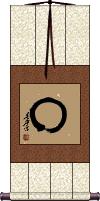
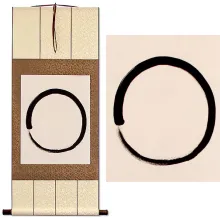
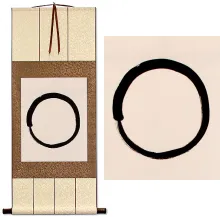
〇 is the famous Enso symbol, which you will see widely used by Japanese Zen Buddhists.
In a twist, I am starting to see Enso used more and more by Chinese Buddhists.
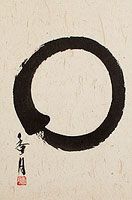
Here is the typical appearance of Enso artwork by Japanese calligrapher Kougetsu.
Enso is not a Japanese Kanji character. It falls more into the category of a symbol. There is some debate, but many consider Enso to be a religious symbol.
Some call this “The Circle of Enlightenment.” Others call it the “Infinity Circle.” If you actually took the meanings of the two Kanji (円相) that make up the word “En-so,” you could read it as “Mutual Circle” or “Circle of Togetherness.” I think the Enso symbol can simply mean different things to different people. Therefore, you should let it have the meaning that you perceive.
The appearance of your Enso will be determined by the artist's personal style, feeling, mood, etc.
Always rising after a fall or repeated failures
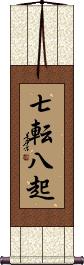
七転八起 is a Japanese proverb that relays the vicissitudes of life, with the meaning “seven times down eight times up.”
Some would more naturally translate it into English as “Always rising after a fall or repeated failures” or compare it to the English, “If at first, you don't succeed, try, try again.”
The first Kanji is literally “7.” The second means “fall down” (sometimes this Kanji means “turn around,” “revolve” or “turn over” but in this case, it holds the meaning of “fall”). The third is “8.” And the last is “get up,” “rouse,” or “rise.”
if you fail 7 times, you should recover from those events and be prepared to rise an 8th time. This also applies if it is the world or circumstances that knock you down seven times...
...just remember that you have the ability to bounce back from any type of adversity.
Note: This can be pronounced in two ways. One is “shichi ten hakki” or “shichitenhakki.” The other is “nana korobi ya oki” also written, “nanakorobi-yaoki.”
Special Note: The second character is a Kanji that is not used in China. Therefore, please select a Japanese calligrapher for this title.
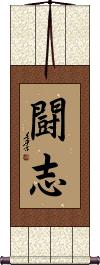
This literally means “fighting spirit” or “the will to fight.”
As in the spirit that a warrior, soldier, athlete, or fighter must possess.
Alternate Japanese version
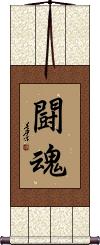
闘魂 is an alternate title with the meaning “fighting spirit” or “the will to fight.”
Alternate / Japanese version
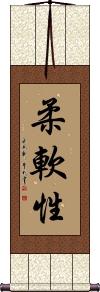
柔軟性 is the Chinese, Japanese Kanji, and Korean Hanja word that means “flexibility.”
It can also mean “compatibility,” “pliability,” “softness” and “elasticity.”
See Also: Flexibility | Cooperation
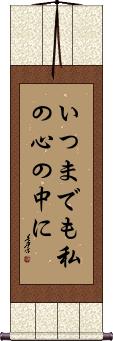
いつまでも私の心の中に means “forever in my heart” or “always in my heart” in Japanese.
Note: Because this selection contains some special Japanese Hiragana characters, it should be written by a Japanese calligrapher.
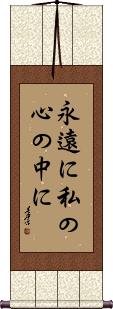
永遠に私の心の中に means “forever in my heart” or “always in my heart” in Japanese.
The character breakdown:
永遠 (eien) eternity; perpetuity; immortality; permanence.
に (ni) indicates the location of a person or thing.
私の (watashi no) my; mine.
心の中 (kokoro no naka) the middle of one's mind; the midst of one's heart.
に (ni) indicates the location of a person or thing (makes this “in” the middle of one's heart).
Note: There’s more than one way to say “Forever in My Heart” in Japanese, so you’ll find another version in our database. This is the very verbose version.
Note: Because this selection contains some special Japanese Hiragana characters, it should be written by a Japanese calligrapher.
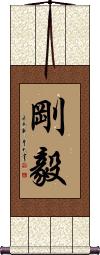
剛毅 is a Japanese and Chinese word that means resolute and firm, fortitude, firmness of character, hardihood, manliness, or macho.
See Also: Perseverance | With All the Strength of Your Heart | Tenacious / Tenacity
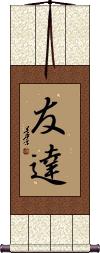
友達 is the most common way to say “friend” in Japanese.
See Also: Best Friends | Friend | Friendship
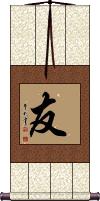
友 is the simplest way to express the idea of friends or friendship in Chinese.
It can mean friend, companion, or pal in Japanese. In Korean, it can mean friend, companion, or associate.
This single character is open to interpretation, so it can mean different things to different people (not necessarily a bad thing, as you can decide what it means to you). If you want a more concisely-defined word, you should probably pick one of our multi-character friendship-related words.
See Also: Best Friends | Friend | Friendship
military strategy
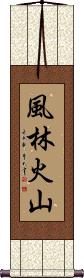
風林火山 is the battle strategy and proverb of Japanese feudal lord Takeda Shingen (1521-1573 AD).
This came from the Art of War by Chinese strategist and tactician Sun Tzu (Sunzi).
You can think of this as an abbreviation to remind officers and troops how to conduct battle.
風林火山 is a word list: Wind, Forest, Fire, Mountain.
The more expanded meaning is supposed to be...
“Swift as the wind, quiet as the forest, fierce as fire, and immovable as a mountain”
“As fast as the wind, as quiet as the forest, as daring as fire, and immovable as the mountain”
“Move as swift as the wind, stay as silent as a forest, attack as fierce as fire, undefeatable defense like a mountain”
“Move swiftly like the wind, stay silent like the forest, attack fiercely like fire, take a tactical position on the mountain”
See Also: Art of War
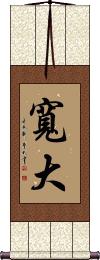
寬大 is a Chinese, Japanese, and Korean word that means Generosity.
Generosity is giving and sharing. You share freely, not with the idea of receiving something in return. You find ways to give others happiness and give just for the joy of giving. Generosity is one of the best ways to show love and friendship.
寬大 can also be translated as charitable, magnanimity, liberality, or in some contexts, broad-mindedness.
Note: There is a tiny deviation in the first character when written in Japanese. If you choose our Japanese master calligrapher, the little dot on the lower right of the first character will be omitted. With or without the dot, this can be read in Chinese, Japanese Kanji, and old Korean Hanja.
See Also: Benevolence | Lotus | Charity
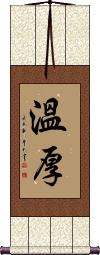
溫厚 is a Chinese, Japanese, and old Korean word for gentle or gentleness.
This can also mean “kindness” (more as an adjective like “kind person”).
 The modern Japanese version of the first character looks like the one to the right. If you want this modern Japanese form, just click on that Kanji instead of the button above.
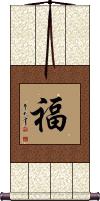
福 is pronounced “fu” in Chinese.
The character “fu” is posted by virtually all Chinese people on the doors of their homes during the Spring Festival (closely associated with the Chinese New Year).
One tradition from the Zhou Dynasty (beginning in 256 B.C.) holds that putting a fu symbol on your front door will keep the goddess of poverty away.
福 literally means good fortune, prosperity, blessed, blessedness, happiness, and fulfillment.
You'll also see this character in Vietnam (where Chinese characters were the written form until a romanization reform) where it is pronounced Phúc - a word commonly used in Vietnamese names because of its good meaning.
See Also: Serendipity / Lucky Coincidence
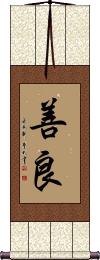
善良 is a word that means good and honest, kind-hearted, goodness, excellence, and/or virtue.
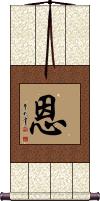
恩 is often translated as “kind act from above,” as in “The Grace of God.”
This doesn't necessarily have to come from God. It could be a favor paid to you, or help that you received (or gave). Of course, you can decide for yourself whether the grace or favor given to you by a friend is actually a gift from God.
Other possible translations of this character:
Favor / favour, acts of kindness, merits, beneficial Influence, kindness, indebtedness, obligation, and benevolent influence.
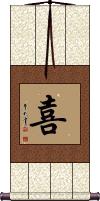
喜 is the Chinese, Japanese Kanji, and Korean Hanja for the kind of happiness known in the west as “joy.”
喜 can also be translated as rejoice, enjoyment, delighted, pleased, or “take pleasure in.” Sometimes it can mean “to be fond of” (in a certain context).
If you write two of these happiness/joy characters side by side, you create another character known in English as “double happiness,” which is a symbol associated with weddings and happy marriages.
There is another version of this character that you will find on our website with an additional radical on the left side (exactly same meaning, just an alternate form). The version of happiness shown here is the commonly written form in China, Japan and South Korea (banned in North Korea).
See Also: Contentment | Happiness | Joy
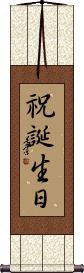
祝誕生日 is the shortest way to write “Happy Birthday” in Japanese.
The first Kanji means “wish” or “express good wishes,” and the last three characters mean “birthday.”
Because a birthday only lasts one day per year, we strongly suggest that you find an appropriate and personal calligraphy gift that can be hung in the recipient's home year-round.
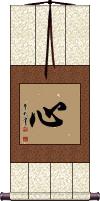
心 would often be translated as “heart.”
However, because it was believed in Chinese culture for thousands of years that your consciousness and thoughts came from the big red organ in the middle of your chest, it also means “mind” or “spirit” and sometimes even “soul.”
In Korean, beyond heart, mind, and spirit, this character can mean moral, nature, mind, affections, intentions, core, and center. In fact, it is used in Chinese to mean “center” as well but only with another character in front of it. For instance, “medical center” or even “shopping center.” Separately and alone, it will not be read with that “center” meaning unless thought of as “the center of your soul.”
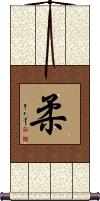
This 柔 Kanji literally means flexible, pliable, gentle, or yielding.
柔 is also the first Kanji of the Japanese martial arts titles of Judo and Jujutsu (Jujitsu). In those cases, it's pronounced “ju” in Japanese. However, alone, the classic pronunciation is “yawara.” Some translate this Kanji (in the context of martial arts) as “The Heart of Judo.”
Please note that this just means pliable, gentle, and yielding in Chinese and old Korean Hanja. They do know what Judo and Jujitsu are but if this character is seen alone in China or Korea, people generally will not think of the martial arts context.
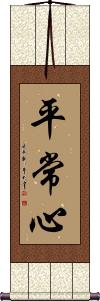
平常心 is the title Heijoshin, as associated with Kendo and Aikido schools of Japanese martial arts.
平常心 is also a word in Japanese that can mean “one's self-possession” or “presence of mind.”
In Chinese and Korean, this means “simplicity heart,” “composure,” “calmness,” or a “sense of orderliness.” In Chinese and Korean, this implies that you enjoy what you have, keep your heart in balance, and have no over-blown ambitions.
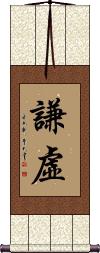
謙虛 can also be translated as humbleness or humility.
In Chinese and Korean, the first character means “modest.” The second means “empty.” Together these characters reinforce the ideas of modesty and being empty of ego.
 In Japan, they tend to use a slightly-simplified version of the second Kanji for this word. It also happens to be an alternate/simplified version used in China too. If you want to order the modern Japanese/simplified version, just click in the Kanji image shown to the right, instead of the button above.
See Also: Moderation / Temperance
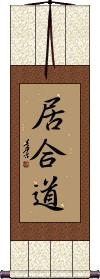
居合道 is the Japanese Kanji title for the martial art of Iaidō, which emphasizes the smooth and elegant draw of the sword from its scabbard.
These same characters are used in Chinese and old Korean but not with the same meaning as read in Japanese. Therefore, this should be considered a “Japanese only” title.
fudoshin
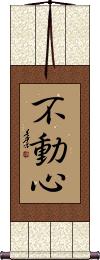
不動心 is one of the five spirits of the warrior (budo) and is often used as a Japanese martial arts tenet.
Under that context, places such as the Budo Dojo define it this way: An unshakable mind and an immovable spirit is the state of fudoshin. It is courage and stability displayed both mentally and physically. Rather than indicating rigidity and inflexibility, fudoshin describes a condition that is not easily upset by internal thoughts or external forces. It is capable of receiving a strong attack while retaining composure and balance. It receives and yields lightly, grounds to the earth, and reflects aggression back to the source.
Other translations of this title include unwavering mind, immovable mind, unwavering composure, imperturbability, steadfastness, keeping a cool head in an emergency, or keeping one's calm (during a fight).
The first two Kanji alone mean immobility, firmness, fixed, steadfastness, motionless, and idle.
The last Kanji means heart, mind, soul, or essence.
Together, these three Kanji create a title defined as “immovable mind” within the context of Japanese martial arts. However, in Chinese, it would mean “motionless heart,” and in Korean Hanja, “wafting heart” or “floating heart.”
Japanese = Infinity / Chinese = No limits
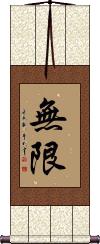
無限 is the Chinese and Japanese word meaning infinity, unlimited or unbounded.
無限 literally translates as “without limits” or “without [being] bound.”
The first character means “never” or “not,” like the prefix “un-.”
The second means “limited,” “restricted,” or “bound.”
Please note that the Japanese definition leans more toward “infinity” and the Chinese is more about being “boundless” or “without limits.”
In Korean, this means infinity, infinitude, or boundlessness. But in Korean, this term has many interpretations or contexts, so your intended meaning might be vague or ambiguous.
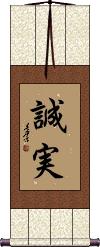
誠実 is the Japanese version of integrity which can also be defined as a combination of “sincere, honest, and faithful.”
Some may also define this as “loyal” or “loyalty.” In some contexts, it can mean “genuine.” Yes, all of this meaning in just one Japanese word!
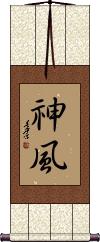
神風 is the famous title used during WWII to describe Japanese fighter plane pilots, many of whom performed suicide attacks by flying their planes into ships and other Allied targets.
The Japanese word, Kamikaze actually means “divine wind.”
See Also: Kamikaze / Divine Wind
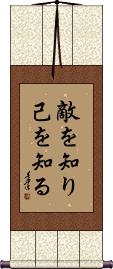
敵を知り己を知る is the Japanese version of “know your enemy, know yourself.”
There is a longer version of this proverb that adds, “...and you can win 100 battles.”
Note: Because this selection contains some special Japanese Hiragana characters, it should be written by a Japanese calligrapher.
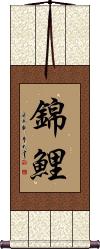
If you like or collect and maintain koi fish, 錦鯉 is the wall scroll for you.
Technically, this is a certain and revered species of “koi fish” in Japan, but it is the most normal selection for a wall scroll (more normal than the actual Kanji for “koi” or “fish” alone.
This literally means “brocade carp” or “embroidered carp.” This term is also used to mean the same thing in China (which is the origin of koi fish breeding and cultivation, several generations before they became popular in Japan).
For those of you that don't know, the Kanji for “koi” (which is pronounced “goi” in this entry) really means “carp.” If you want the word that means “koi fish,” it would just be the generic word for “carp fish.” That would include both colorful carp and the more mundane gray carp (the ones people eat if they don't mind lots of bones).
The art of balancing your life
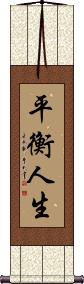
This 平衡人生 title suggests that you are actively trying to keep your life in balance.
Think of this as the action verb of seeking or having a balanced life.
The first two characters mean balance, equilibrium, or keeping things equal.
The last two characters mean “life.” Literally “human life.”
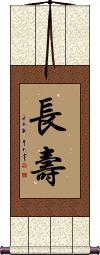
Used as a noun, This means “longevity” or “the ability to live long.”
It can also be an adjective meaning “long-lived.”
 Please note that Japanese use a simplified version of the second character of longevity - it also happens to be the same simplification used in mainland China. Click on the character to the right if you want the Japanese/Simplified version of this two-character longevity calligraphy.
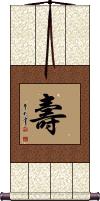
壽 can mean “long life” or “longevity” in the simplest form.
Please note that Japanese use a simplified version of this character - it also happens to be the same simplification used in mainland China. Click on the character to the right if you want the Japanese/Simplified version.
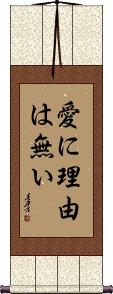
愛に理由は無い is a Japanese phrase that means “love without reason,” or “love doesn't need a reason.” It's a pretty cool phrase in Japanese
Note: Because this selection contains some special Japanese Hiragana characters, it should be written by a Japanese calligrapher.
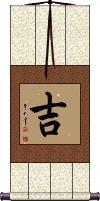
吉 is a simple way to express the state of being lucky.
Also used in conversation to hope that all is well with someone. 吉 is more often seen as part of a compound word with a lucky association (especially in Korean).
Not as often used in Japanese but still means “good luck” but can also mean “joy” in Japanese.
See Also: Good Luck
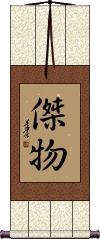
傑物 is a Japanese title that can mean “great man,” “heroic figure,” or “remarkable character.”
You would be giving someone a great honor by presenting this wall scroll to them as a gift.
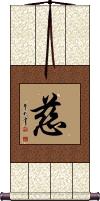
慈 is the simplest way to express the idea of compassion.
This can also mean love for your fellow humans, humanity, or living creatures. Sometimes this is extended to mean charity.
This term is often used in a Buddhist or Christian context. The concept was also spoken of by Laozi (Lao Tzu) in the Dao De Jing (Tao Te Ching).
慈 is considered the direct translation of the Sanskrit word मैत्री (maitrī) Pali word मेत्ता (mettā). In this context, it means benevolence, loving kindness, and goodwill.
This Chinese character is understood in Japanese but is usually used in compound words (not seen alone). Also used in old Korean Hanja, so it's very universal.
See Also: No Mercy | Benevolence | Forgiveness | Kindness
Shoshin
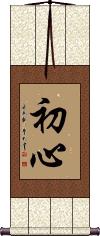
初心 is often translated in Japanese as “beginner's mind” or “beginner's spirit.”
In Chinese, the dictionary definition is “one's original intention.”
The first character means first, initial, primary, junior, beginning, or basic.
The second character means heart, mind, soul, or essence.
初心 is one of the five spirits of the warrior (budo) and is often used as a Japanese martial arts tenet. Under that context, places such as the Budo Dojo define it this way: The state of shoshin is that of a beginners mind. It is a state of awareness that always remains fully conscious, aware, and prepared to see things for the first time. The attitude of shoshin is essential to continued learning.
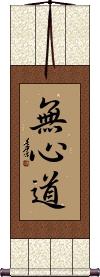
無心道 is the base title for Mushindo (without mind way). 無心道 is often coupled with a trailing word to make titles like Mushindo-Kai or Mushido-Kempo.
If you are looking for this title, you probably know more than I can tell you about this martial arts style.
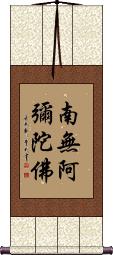
南無阿彌陀佛 is how to express “The Compassionate Amitabha Buddha” (especially for the Pure Land Buddhist Sect).
Some will translate as “Homage to Amitâbha Buddha” or “I seek refuge in the Amitâbha Buddha.”
This is valid in Chinese characters, Japanese Kanji, and old Korean Hanja.
Sometimes modern Japanese use a different version of the 4th and last Kanji, but the version shown here is the most universal.
This is used to pay homage to Amitabha Buddha.
See Also: Bodhisattva | Buddhism | Nirvana
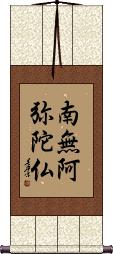
南無阿弥陀仏 is the modern Japanese version of “Namu Amida Butsu” or “The Compassionate Amitabha Buddha.”
Some will translate this as “I sincerely believe in Amitabha; Lord have mercy on me.”
This phrase especially applies to Japanese Pure Land Buddhists.
There is a universal version using ancient characters (with more strokes) for the 4th and last characters. That version is also used in Chinese, Korean, and occasionally Vietnamese.
This is used to pay homage to Amitabha Buddha.
See Also: Bodhisattva | Buddhism | Nirvana
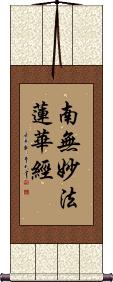
南無妙法蓮華經 is sometimes translated as the “Devotion to the Law of the Lotus Flower Scripture.”
This is a meditation chant and homage to the Lotus Sutra, used by Nichiren Buddhists in Japan.
This is also a chant used in China by certain sects of Buddhism that celebrate the deity Guanyin.
Also romanized as “Nam Myōhō Renge Kyō” or without accents as “Nam Myoho Renge Kyo.”

The last character was originally written as seen on the left. Sometimes, you will see it written in the Japanese variant form as shown on the right. If you want this Japanese variant, click on the “Modern Japanese Variant” text instead of the button up by the main title of this entry.
The natural world
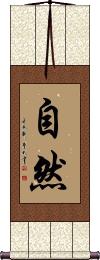
自然 is the simple way to express nature in Chinese, Japanese Kanji, and old Korean Hanja.
This can also be translated as “the natural world.”
In Japanese and Korean, this term is sometimes used to signify spontaneity or a spontaneous act.
In the context of Taoism or Daoism, this is a key concept that literally means “of its own” or “by itself” and thus naturally, natural, spontaneously, freely, or in the course of events.
Also known as known as ziran or tzu-jan
Japanese Genbu Karate Club
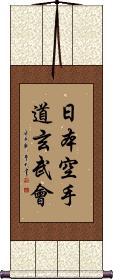
日本空手道玄武會 is the title for Nippon Karate-Do Genbu-Kai.
A Japanese karate association of the Genbu school.
Note that while this title does make perfect sense in Chinese, it is really a Japanese title. In fact, the first word is “Japanese/Japan.”
If you’d like your martial arts school, dojo or club added to our calligraphy database for easy ordering of a custom calligraphy wall scroll, just contact me.
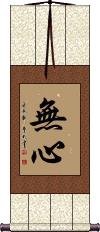
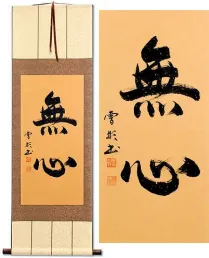
In Japanese, 無心 means innocent or without knowledge of good and evil. It literally means “without mind.”
無心 is one of the five spirits of the warrior (budo) and is often used as a Japanese martial arts tenet. Under that context, places such as the Budo Dojo define it this way: “No mind, a mind without ego. A mind like a mirror which reflects and dos not judge.” The original term was “mushin no shin,” meaning “mind of no mind.” It is a state of mind without fear, anger, or anxiety. Mushin is often described by the phrase “Mizu no Kokoro,” which means “mind like water.” The phrase is a metaphor describing the pond that clearly reflects its surroundings when calm but whose images are obscured once a pebble is dropped into its waters.
This has a good meaning in conjunction with Chan / Zen Buddhism in Japan. However, out of that context, it means mindlessness or absent-mindedness. To non-Buddhists in China, this is associated with doing something without thinking.
In Korean, this usually means indifference.
Use caution and know your audience before ordering this selection.
More info: Wikipedia: Mushin
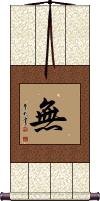
無 is the simple way to express “nothing.”
However, this single character leaves a bit of mystery as to what you might really mean if you hang it as a wall scroll. I'm not saying that's a bad thing; as you can decide what it means to you, and you won't be wrong if you stay within the general context.
More info: 無 is usually used as a suffix or prefix for Chinese and Japanese words (also old Korean). It can be compared to “un-” or “-less” in English. It can also mean “not to have,” no, none, not, “to lack,” or nothingness.
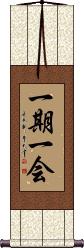
This Japanese title can mean “for this time only,” “chance meeting,” “one meeting, one opportunity,” “never again,” or “one chance in a lifetime.”
The characters literally mean “one time one meeting” - of course, the Kanji characters have meaning far beyond a direct translation like this.
Some might use this proverb to talk of an opportunity that presents itself just once in your life. It could also be a one-and-only chance meeting with your true soul mate. An expression of any event that might happen once in a lifetime.
This is primarily a Japanese title, however, there is also a Traditional Chinese (and old Korean) version of this proverb. Just the last character is different. The traditional form was used in Japan before WWII and in Korea prior to 1900. This title is somewhat known in China.
If you want the older traditional form, just click on the character to the right.
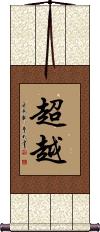
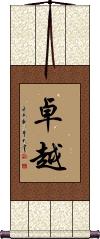
In Chinese, Japanese Kanji, and old Korean Hanja, 超越 means to overcome, surpass, transcendence, excel, exceed, go beyond, rise above, or transcend.
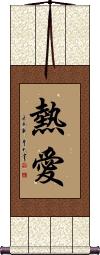
熱愛 means love passionately, ardent love, devotion, adoration.
The literal meaning is “hot love,” as the first character means heat, fervent, hot, and warm. Sometimes it can mean fever, restlessness, or zeal. The second character is, of course, love. If you adore and are devoted to someone with all your love, this is the title for you.
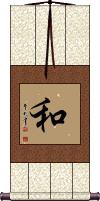
和 is the simplest form of peace and harmony.
和 can also be translated as the peaceful ideas of gentle, mild, kind, and calm. With a more harmonious context, it can mean union, together with, on good terms with, or on friendly terms.
Most people would just translate this character as peace and/or harmony. 和 is a very popular character in Asian cultures - you can even call it the “peace symbol” of Asia. In fact, this peace and harmony character was seen repeatedly during the opening ceremony of the 2008 Olympic Games in Beijing (a major theme of the games).
In old Chinese poems and literature, you might see this used as a kind of “and.” As in two things summed together. As much as you could say, “the sun and moon,” you could say “the sun in harmony with the moon.”
See Also: Inner Peace | Patience and Preparation | Simplicity
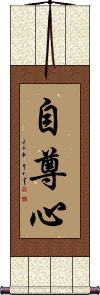
自尊心 is a Japanese and Korean word that means “pride” or “self-respect.”
The first Kanji/Hanja means oneself. The second can mean revered, valuable, precious, noble, or exalted. And the last Kanji/Hanja means heart, mind, and/or spirit.
While these characters make sense and hold the same general meaning in Chinese, this is not a normal Chinese word. This selection should only be used if your audience is Japanese or Korean.
See Also: Respect | Pride | Self-Reliance | Self-Control | Self-Discipline Martial Arts
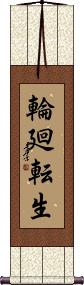
輪廻転生 is a Japanese Zen quote or proverb that expresses the idea of all things being in flux through the endless circle of birth, death, and rebirth or the circle of transmigration.
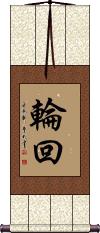
輪回 is a universal word in Japanese and Chinese that expresses the Buddhist idea of “reincarnation,” “transmigration of souls,” or “the eternal cycle of birth and death.”
In some contexts, this can also mean “karma,” and others will say it represents “samsara.”
The first character means wheel, ring, turn, circle, loop, or rotate.
The second character can be thought of as a suffix meaning “-times.” This second character can also refer to something that revolves, returns, goes back, or is a counter of the number of occurrences of some event.
Together the sum supersedes the parts, and it means reincarnation. But knowing the essence of each character may help you understand some of the meaning behind the word.
 Shown to the right is the more common way to write the second character in Japanese.
it’s
an alternate form of this character in Chinese (so neither way is technically wrong in either language). If you select a Japanese calligrapher, expect that is will look like the Kanji to the right.
See Also: Buddhism | Samsara / Endless Cycle of Rebirth
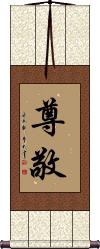
尊敬 is how to express the ideas of respect, honor, reverence, esteem, nobility, and sometimes the state of being noble, all in one word. Most of the time, this is used as “giving respect,” but depending on the context, it can suggest that you should try to be “worthy of respect.”
Although pronounced differently, the Chinese characters, Japanese Kanji, and Korean Hanja are the same across these languages. This is an indication that this word is very old and crosses many barriers and cultures in the Orient (East Asia).
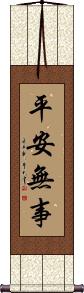
This proverb means “safe and sound without toil or trouble.”
It roughly means that all is well with a feeling of complete safety. The ideas contained in these characters include well-being, peace, tranquility, quietness, calmness, and non-problematic.
See Also: Tranquil / Tranquility / Serenity | Worldwide Peace
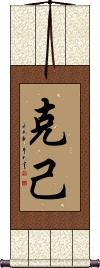
克己 can mean “self-denial,” “self-abnegation,” “self-restraint,” “self-discipline,” “self-mastery,” or selflessness.
As a tenet of Korean taekwondo, and other martial arts, this is often used with the title “self-control.”
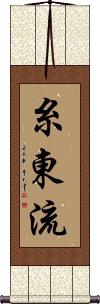
糸東流 is the title for Shito-Ryu.
Note that while this title can be pronounced in Chinese, it only makes complete sense in Japanese.
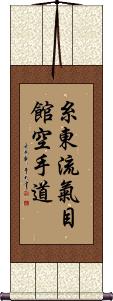
糸東流氣目館空手道 is the title for Shito-Ryu Ki-Me-Kan Karate-Do.
A school of Karate.
Note that while this title can be pronounced in Chinese, it only makes complete sense in Japanese.
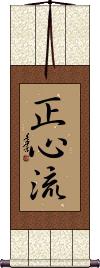
正心流 is a Japanese title that means “right heart style,” “true mind method,” or “truthful heart school.”
The first character means right, correct, greater, or true.
The second character means heart, mind, soul, or essence.
The third character means style, method, or some will translate it as a school.
Please note, there is more than one martial arts school that romanizes as Shoshin-Ryu.
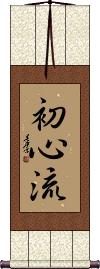
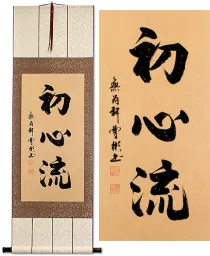
初心流 is often translated in Japanese as “beginner's mind style,” “beginner's spirit method,” or “beginner’s-mind school”
The first character means first, initial, primary, junior, beginning, or basic.
The second character means heart, mind, soul, or essence.
The third character means style, method, or some will translate it as a school.
Please note, there is more than one martial arts school that romanizes as Shoshin-Ryu.
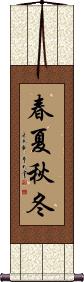
春夏秋冬 is one way to express “The Four Seasons” or “All Year Round.”
The characters here represent Spring, Summer, Autumn (Fall), and Winter.
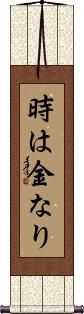
時は金なり is the Japanese phrase meaning “Time is Money.”
It matches the use and meaning of the same idiom as used in English.
Note: Because this selection contains some special Japanese Hiragana characters, it should be written by a Japanese calligrapher.
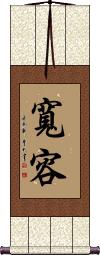
Being tolerant is accepting differences. You don't expect others to think, look, speak or act just like you. You are free of prejudice, knowing that all people have feelings, needs, hopes, and dreams. Tolerance is also accepting things you wish were different with patience and flexibility.
寬容 can also be translated as magnanimity, generosity, or leniency.
Note: There is a tiny deviation in the first character when written in Japanese. If you choose our Japanese master calligrapher, the little dot on the lower right of the first character will be omitted. With or without the dot, this can be read in Chinese, Japanese, and old Korean.
See Also: Patience and Preparation

人間性を再生するのは寛容な心親切な言葉奉仕と思いやりの精神 is known as the Triple Truth of Buddhism in Japanese.
The Buddha ordered that all should know this triple truth...
A generous heart, kind speech, and a life of service and compassion are the things that renew humanity.
That is the English translation most commonly used for this Japanese Buddhist phrase. You might have seen this on a coffee cup or tee shirt.
Note: Because this selection contains some special Japanese Hiragana characters, it should be written by a Japanese calligrapher.
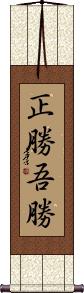
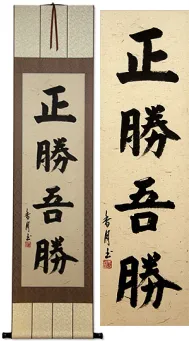
正勝吾勝 is a proverb that is often translated as “True victory is victory over oneself.”
However, literally, Kanji by Kanji, means “True victory [is] my/self victory.”
My Japanese friends rate this very highly for a wall scroll.
See Also: Know Thy Enemy | Know Thyself
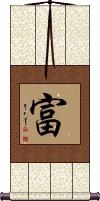
The title says it all; this word is clearly understood in Chinese and Japanese as well as Korean Hanja.
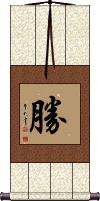
勝 is a single character that means to win or be victorious.
This can also be translated: To overcome; success; to beat; to defeat; to surpass; superior to; to get the better of; better than; surpassing; superb.
In another context, this can mean beautiful (scenery); scenic spot; or scenic beauty.
In Taiwanese Mandarin, this can be pronounced with the first tone (sheng1) and mean: Able to bear; equal to (a task).
In Japan, this can also be the name Masaru.
In Korea, this has the same meaning but can also be the surname Sŭng.
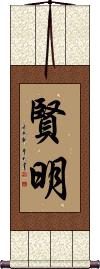
賢明 is a Japanese word that refers to wisdom, intelligence, and prudence.
賢明 was originally a Chinese word that referred to a wise person or enlightened ruler. It means wise and able, sagacious now in China.
See Also: Realization and Knowledge | River of Literacy | Sea of Learning | Read
Daoist / Taoist Tenet
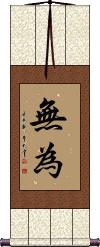
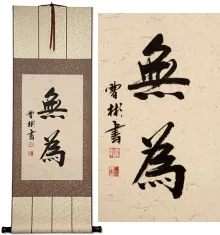
無為 or “Wu Wei” is a Daoist (Taoist) tenet that speaks to the idea of letting nature take its course.
Some will say it's about knowing when to take action and when not to. In reality, it's more about not going against the flow. What will happen is controlled by the Dao (Tao), for which one who follows the Dao will not resist or struggle against.
You can think of 無為 as the Chinese way to express “laissez-faire.”
There is a lot more to this concept, but if you are looking for this entry, you already know the expanded concept.
Warning: Outside of the Daoist context, this means idleness or inactivity (especially in Japanese, where not everyone knows this as a Daoist concept, though it does pair well with the Japanese concept of Wabi-Sabi).
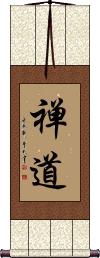
禪道 is a title used in certain contexts but is not widely known by the general population of China or Japan.
In Japanese, you will see this title romanized as “zendo,” which is the brand name of a board game, and also a title used by some martial arts studios and karate dojos. Oddly, many translate this as “zen fist,” although there is no “fist” in the title. If you literally translated this title, it would be “meditation way” or “meditation method.”
In Chinese, this would be “chan dao” with the same literal meaning as the Japanese title. It's used in China by just a handful of martial arts styles/studios.
You should only order this title if you really understand the meaning, and it has some personal connection to you (such as practicing a martial art style that uses this title, or if you love the board game Zendo). Many who see your wall scroll will not be familiar with this title, and you'll have some explaining to do.
 The first character can also be written in a more complex traditional way as shown to the right. Let us know in the special instructions for your calligraphy project if you want this style.
 If you order this from the Japanese master calligrapher, the first character will automatically be written with an extra dot on top. This is the variant form of the original Chinese character which is commonly used in modern Japan Kanji. See sample to the right.
All of our calligraphy wall scrolls are handmade.
When the calligrapher finishes creating your artwork, it is taken to my art mounting workshop in Beijing where a wall scroll is made by hand from a combination of silk, rice paper, and wood.
After we create your wall scroll, it takes at least two weeks for air mail delivery from Beijing to you.
Allow a few weeks for delivery. Rush service speeds it up by a week or two for $10!
When you select your calligraphy, you'll be taken to another page where you can choose various custom options.
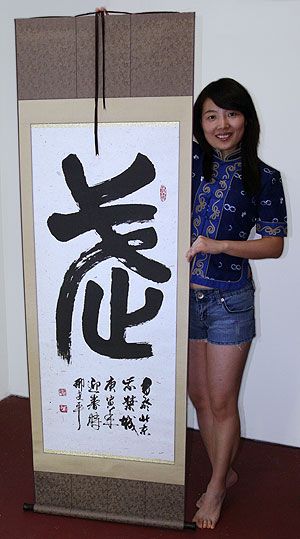
The wall scroll that Sandy is holding in this picture is a "large size"
single-character wall scroll.
We also offer custom wall scrolls in small, medium, and an even-larger jumbo size.
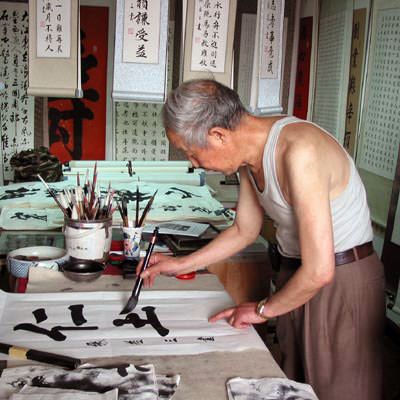
Professional calligraphers are getting to be hard to find these days.
Instead of drawing characters by hand, the new generation in China merely type roman letters into their computer keyboards and pick the character that they want from a list that pops up.
There is some fear that true Chinese calligraphy may become a lost art in the coming years. Many art institutes in China are now promoting calligraphy programs in hopes of keeping this unique form
of art alive.
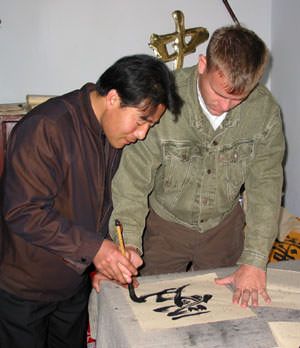
Even with the teachings of a top-ranked calligrapher in China, my calligraphy will never be good enough to sell. I will leave that to the experts.
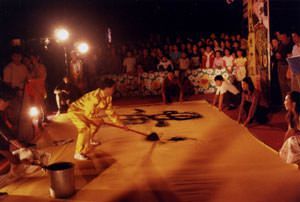
The same calligrapher who gave me those lessons also attracted a crowd of thousands and a TV crew as he created characters over 6-feet high. He happens to be ranked as one of the top 100 calligraphers in all of China. He is also one of very few that would actually attempt such a feat.